
Bri uses her platform
for change*
Read how undergoing the Resensation® technique with
Avance® (acellular nerve allograft–arwx) after
prophylactic mastectomy prompted Bri Majsiak to share
her story, create community and advocate for other
patients.
4 minute read
Ready to take action
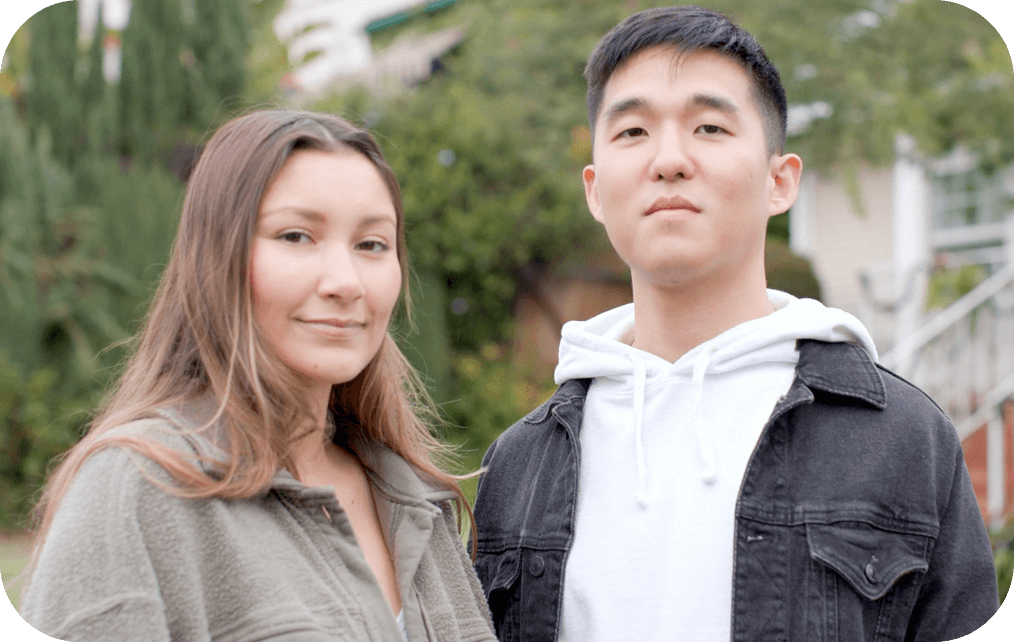
Bri Majsiak is a co-founder of The Breasties, the first all-inclusive nonprofit organization to create a community for survivors, previvors, thrivers and caregivers of patients with breast and gynecologic cancers. She is also a breast cancer previvor who chose the Resensation technique as part of her breast reconstruction.
Bri was just 5 years old when she lost her mother to stage 4 breast cancer.
Growing up without a mother was hard enough, but the possibility of a cancer diagnosis was always in the back of Bri’s mind. Bri worried constantly about her increased risk of breast cancer, and at 17 she had her first breast screening. Doctors found a mass, which required Bri to go through the process of getting a biopsy. Luckily, it was benign.
She continued regular screenings throughout college, eventually opting for genetic testing to see if she was predisposed for the same kind of cancer her mom had.
When she tested negative for BRCA, but positive for a lesser-known gene associated with breast cancer, she was ready to take control.
A proactive approach, a lingering question

In June 2020, Bri decided she would undergo a prophylactic mastectomy followed by immediate breast reconstruction using implants. The decision to have a mastectomy at 26 years old was a tough one. She knew it would be a significant change to her body; one that she would carry with her for the rest of her life.
But another change that worried Bri was facing life with a numb chest. Loss of sensation in the chest is a common side effect of mastectomy, one she had heard about from many members of the breast cancer community.1 She wondered how she would deal with the lack of feeling for the rest of her life.
Bri also learned about the Resensation technique performed during breast reconstruction as an important option to consider.2
Bri searched for a medical team who would advocate for her and perform the Resensation technique during her reconstruction surgery. Once she found one, she moved forward with a new game plan.
When you’re undergoing something like a mastectomy, you have such tunnel vision… and it’s really up to the medical team to help you think about that after and how sensation can really impact you.Bri
New emotions and experiences
“After my mastectomy, I was suddenly afraid of my own body. Seeing the incisions made me feel completely disconnected from myself, and that’s when I realized how important it is for the Resensation technique to be more widely available. No one should have to spend the rest of their life feeling detached from such a fundamental part of who they are.”
Bri feels lucky to have learned about the Resensation technique.
Renewed purpose
Through The Breasties, Bri is committed to creating spaces that support anyone impacted by breast and gynecologic cancer. She’s especially determined to create resources that spotlight community members of color—something that didn’t exist during the time of her mom’s diagnosis.
Bri knew she had a story to tell.
She’s been shocked to find so many people who didn’t know the Resensation technique was an option. Who still don’t know it is an option. “It’s important to know that information and resources are out there that can change that.”
Having an option like this, when her mother did not, adds even more meaning to her mission of sharing resources like the Resensation technique. “I know that there are a lot of people out there who never get that opportunity. Who will always see this as a different part of their body and feel disconnected and feel self-conscious,” said Bri.
By sharing her story, Bri hopes she can educate more women to know their options and advocate for themselves.
*Each patient outcome is dependent upon the nature and extent of nerve loss or damage, the timing between nerve loss and repair, and the natural course of the patient’s recovery. These testimonials reflect the experience of the particular individual and may not represent typical results. Bri Majsiak was compensated for her time, but the views expressed are her own.
References
- Flowers K, et al. Pain, numbness, or both? Distinguishing the longitudinal course and predictors of positive, painful neuropathic features vs numbness after breast cancer surgery. PAIN Reports. 2021;6(4):e976. doi:10.1097/PR9.0000000000000976
- Avance® (acellular nerve allograft-arwx) US Prescribing Information, Alachua FL: Axogen corporation; 2026.

Read more stories
Hear from more patients about their experiences with the Resensation technique.

What is AVANCE® (acellular nerve allograft-arwx)?
AVANCE is a sterile nerve graft prepared from donated human tissue. AVANCE is implanted in patients with cut nerves to help restore sensory function.
Important Safety Information
AVANCE has risks related to surgery and the use of donated human tissue that you should understand before treatment.
Surgical and Procedure-Related Risks
As with any nerve repair surgery, complications can occur. Risks related to the surgical procedure and use of AVANCE may include pain, increased sensitivity at the implant site, swelling, bleeding, and infection. Other risks may include scarring (including thick or raised scars), delayed wound healing, scar tissue, and formation of a painful nerve growth. Some patients may experience loss, decrease, or change in sensation or movement in the area being treated. A serious problem involving wound healing has also been reported.
Risk of Infectious Disease Transmission
Because AVANCE is made from donated human tissue, it can pass on infectious diseases. Donors are carefully screened and tested for viruses and other infectious agents. However, these measures do not completely eliminate the risk of disease transmission. All infections thought to be transmitted by AVANCE should be reported to Axogen Corporation at 1-888-296-4361.
What to Watch for After Surgery
After your procedure, your doctor will monitor your healing and nerve recovery. Contact your healthcare provider right away if you notice any of the following:
- Redness, swelling, warmth, or increasing pain at the surgical site
- Drainage or signs of infection
- New or worsening numbness, tingling, or pain
- Changes in movement or weakness
- Any other symptoms that concern you
Always follow your healthcare provider’s instructions during recovery and rehabilitation.